

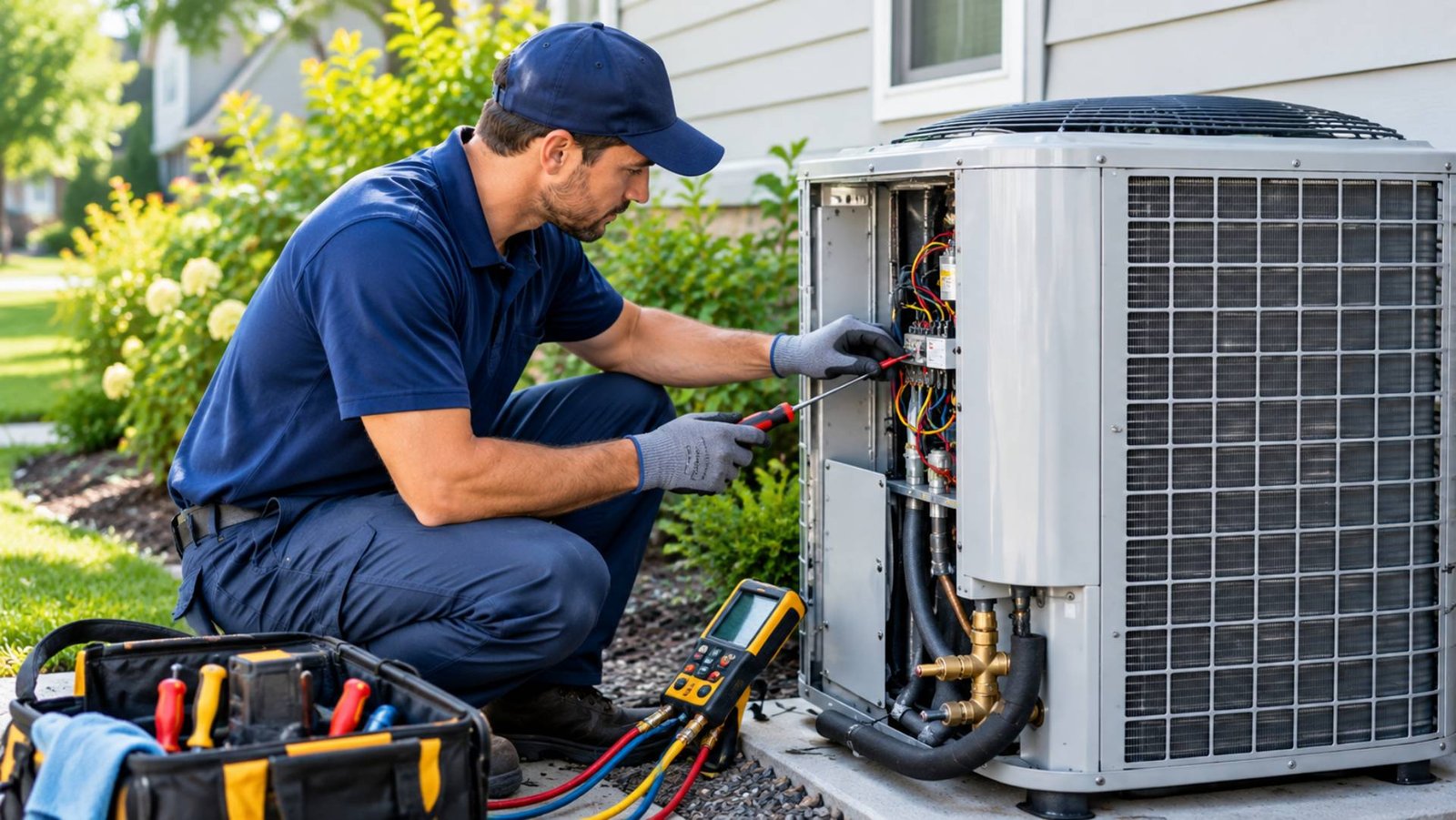
An HVAC tune-up is more than a quick look at your heating and cooling system. A professional technician uses inspection, testing, and equipment-specific procedures to determine whether the system is operating safely and efficiently.
The exact maintenance process depends on the type of HVAC equipment, its condition, and the service being performed. Here are some of the key areas technicians may evaluate.
What Do Technicians Check During an HVAC Tune-Up?
Thermostat
Technicians check thermostat operation, settings, wiring, and communication with the HVAC equipment. A thermostat problem can sometimes appear to be an equipment failure.
Electrical Components
Electrical components play a critical role in keeping an HVAC system running safely and consistently. During a tune-up, a technician may inspect wiring, terminals, capacitors, contactors, relays, fuses, circuit boards, and other electrical connections. They may also test voltage and current levels to determine whether components are operating within the manufacturer’s expected range.
The technician can look for loose connections, corrosion, damaged wiring, overheating, or unusual electrical readings. These issues may cause inconsistent operation, difficulty starting, unexpected shutdowns, or eventual component failure. Identifying them during routine maintenance can help homeowners address problems before they result in an inconvenient breakdown.
Motors and Blowers
Technicians may check blower and fan motors for unusual sounds, vibration, overheating, or other signs of developing problems.
Coils and Airflow
Indoor and outdoor coils may be inspected for dirt or damage. Airflow is also evaluated because restricted airflow can reduce comfort and place additional strain on the system.
Refrigerant Performance
For air conditioners and heat pumps, technicians may check refrigerant-related operating conditions. Low refrigerant is not simply a routine “top-off”; it may indicate a leak or another issue requiring diagnosis.
Condensate Drain
The condensate drain, drain pan, pump, and related safety controls may be checked for blockages, leaks, or drainage problems.
Heating and Safety Components
Heating equipment requires additional inspections because it may involve combustion, high temperatures, fuel, and exhaust gases. Depending on the system, a technician may check burners, ignition components, flame sensors, heat exchangers, gas connections, venting, limit switches, pressure switches, and other safety controls.
The technician may also evaluate combustion and confirm that the heating system is operating according to its design. These checks can help identify problems such as improper ignition, abnormal flame behavior, overheating, blocked venting, or other unsafe operating conditions.
The exact checks depend on the type of heating system and its design. A professional inspection helps ensure that important heating and safety components are functioning properly and that potential concerns are identified before they become more serious.
Why Is Professional HVAC Maintenance Important?
Many HVAC problems develop gradually. A system may continue heating or cooling even when a component is becoming worn or operating outside its expected range.
Professional maintenance can help:
- Identify developing problems early
- Maintain reliable system operation
- Address airflow or performance issues
- Check important safety components
- Reduce the risk of unexpected breakdowns
- Give homeowners a clearer picture of equipment condition
However, maintenance cannot guarantee that an HVAC system will never fail.
How Should You Prepare for an HVAC Tune-Up?
Before the technician arrives:
- Clear access around the HVAC equipment.
- Write down unusual noises, odors, leaks, or comfort problems.
- Have information about your last filter change available.
- Keep previous service records if possible.
- Ask what the tune-up includes before work begins.
It is also helpful to ask what the technician found, whether any issue requires immediate attention, and which recommendations can safely wait.
Frequently Asked Questions
How often should HVAC systems be tuned up?
The ideal schedule depends on the equipment, manufacturer recommendations, usage, climate, and system condition. Your HVAC professional can recommend an appropriate maintenance schedule.
Does an HVAC tune-up include cleaning?
It may include basic cleaning of accessible components, but extensive coil, blower, or duct cleaning may require additional service.
Does HVAC maintenance check refrigerant?
For applicable systems, technicians may evaluate refrigerant-related operating conditions. If something appears abnormal, further diagnosis may be needed.
Can an HVAC tune-up prevent breakdowns?
It cannot prevent every failure, but maintenance can identify certain developing problems before they become major breakdowns.
Conclusion
A professional HVAC tune-up provides much more information than a basic visual inspection. Depending on the system, technicians may evaluate electrical components, motors, blowers, coils, airflow, refrigerant performance, drainage, combustion, and safety controls.
Regular maintenance can help homeowners identify developing concerns, understand equipment condition, and keep their HVAC systems operating reliably. The key is to use a qualified technician who tailors the inspection to the specific equipment rather than relying on a one-size-fits-all checklist.