

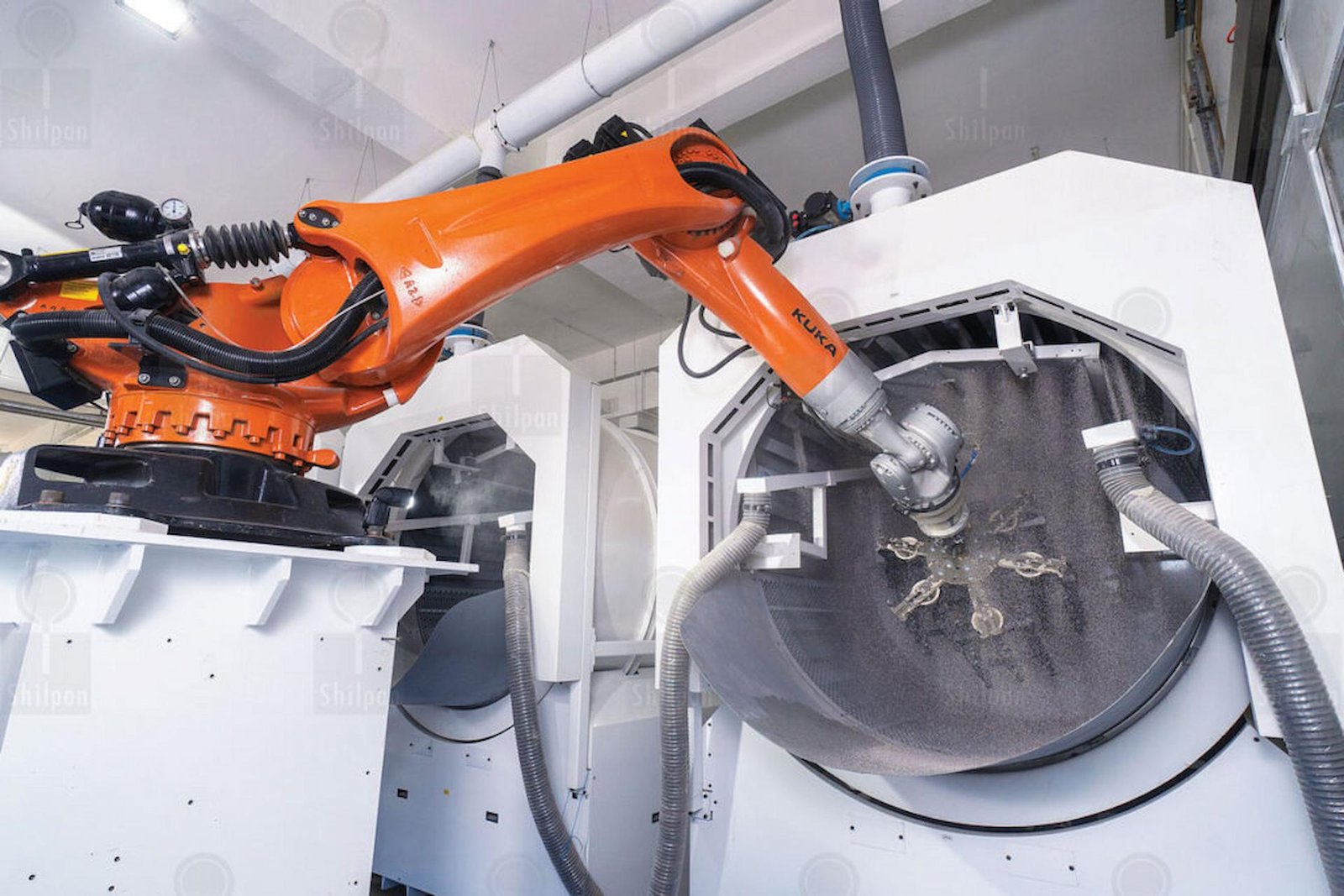
Precision manufacturing demands more than shaped metal. It requires consistency, control, and trust at every stage. Advanced investment casting services with integrated quality control deliver high-integrity components by combining detailed process control, rigorous inspection, and repeatable accuracy—making them essential for today’s most demanding engineering applications.
Introduction:
Investment casting has long been valued for its ability to produce complex metal components with excellent surface finish and tight tolerances. However, as industries demand higher performance, lower failure rates, and stricter compliance, casting alone is no longer enough. Quality must be built into the process, not inspected at the end.
This is where advanced investment casting services with integrated quality control become critical. By embedding inspection, testing, and verification into every production stage, manufacturers achieve high-integrity castings that meet both functional and regulatory expectations. As a result, these services now play a central role in aerospace, automotive, medical, and industrial engineering.
Understanding Advanced Investment Casting in Modern Manufacturing
What Makes Investment Casting “Advanced”
Traditional investment casting focuses on shape replication. Advanced investment casting goes further by controlling variables such as material chemistry, mould integrity, thermal stability, and dimensional repeatability. These refinements significantly improve consistency and reduce the risk of defects.
Moreover, advanced services integrate digital monitoring, controlled process parameters, and traceability systems. As a result, manufacturers gain greater confidence in every batch produced, even for highly complex or safety-critical components.
Key Capabilities of Advanced Investment Casting
- Complex geometries with minimal machining
- Tight dimensional tolerances
- Superior surface finishes
- Repeatable results across production volumes
- Compatibility with a wide range of alloys
The Role of Integrated Quality Control in High-Integrity Casting
Why Quality Control Must Be Integrated, Not Isolated
Quality control is most effective when it is part of the production workflow. When inspections occur only at the final stage, defects are discovered too late. Integrated quality control ensures that deviations are identified early, reducing waste and rework.
In advanced investment casting, quality checks are embedded throughout pattern creation, shell building, melting, pouring, and finishing. This proactive approach supports high-integrity output and predictable performance.
Core Elements of Integrated Quality Control
- Process monitoring at each production stage
- In-process inspections rather than end-only checks
- Documentation and traceability
- Compliance with international quality standards
- Continuous feedback loops for process improvement
From Design to Delivery – Quality Control at Every Stage
Design and Tooling Validation
Quality begins before metal is poured. Design reviews, simulation tools, and tooling validation help identify risks early. These steps ensure that the component design is compatible with investment casting requirements.
At this stage, integrated quality control focuses on dimensional feasibility, material behaviour, and stress points. As a result, downstream defects are significantly reduced.
Process Control During Casting and Finishing
Once production begins, strict controls govern temperature, mould strength, alloy composition, and cooling rates. These factors directly affect structural integrity and dimensional accuracy.
Key quality control activities include:
- Chemical analysis of molten metal
- Shell strength and thickness verification
- Controlled pouring conditions
- Visual and dimensional inspection after casting
- Finishing checks to ensure compliance with specifications
Inspection and Testing Methods That Ensure High Integrity
Non-Destructive Testing (NDT) Techniques
Advanced investment casting relies heavily on non-destructive testing to verify internal and external quality without damaging the component. These methods are essential for high-integrity applications.
Common NDT techniques include:
- Radiographic inspection
- Dye penetrant testing
- Magnetic particle inspection
- Ultrasonic testing
Dimensional and Mechanical Verification
Beyond NDT, dimensional accuracy and mechanical performance must be validated. Coordinate measuring machines and mechanical testing confirm that parts meet design and performance requirements.
These steps ensure that every component leaving production is fit for purpose and ready for critical applications.
Industries That Rely on Advanced Investment Casting with Integrated Quality Control
Aerospace and Defence
In aerospace, failure is not an option. Advanced investment casting with integrated quality control ensures compliance with strict safety and performance standards while enabling complex geometries and weight reduction.
Automotive, Medical, and Industrial Applications
Other sectors also depend on high-integrity castings for reliability and efficiency:
- Automotive components requiring durability and precision
- Medical devices demanding cleanliness and consistency
- Industrial machinery exposed to stress and wear
Across these industries, integrated quality control supports long-term performance and regulatory compliance.
Benefits of Choosing High-Integrity Investment Casting Services
Operational and Commercial Advantages
Integrated quality control does more than improve part quality. It delivers tangible business benefits by reducing scrap rates, improving delivery reliability, and lowering lifecycle costs.
Key advantages include:
- Improved consistency across batches
- Reduced rework and rejection rates
- Enhanced traceability and documentation
- Greater confidence in critical components
- Stronger alignment with industry standards
Long-Term Value for Manufacturers
By investing in advanced investment casting services with integrated quality control, organisations strengthen their supply chains and reduce risk. Over time, this approach supports scalability, innovation, and sustained performance.
Frequently Asked Questions (FAQs)
What is advanced investment casting?
Advanced investment casting is a refined manufacturing process that produces complex metal components with high accuracy, improved consistency, and controlled process parameters. It goes beyond traditional casting by integrating design validation, process monitoring, and quality assurance throughout production.
Why is integrated quality control important in investment casting?
Integrated quality control ensures defects are identified early, not at the final stage. By embedding inspections and testing throughout production, manufacturers achieve higher integrity castings, reduced waste, and improved reliability for critical applications.
Which industries benefit most from high-integrity investment casting?
Aerospace, automotive, medical, and industrial sectors benefit most due to their strict performance and safety requirements. These industries rely on advanced investment casting with integrated quality control for precision, durability, and compliance.
What inspection methods are used in investment casting quality control?
Common methods include non-destructive testing such as radiography, dye penetrant inspection, ultrasonic testing, and magnetic particle testing, along with dimensional and mechanical verification to ensure components meet specifications.
How does integrated quality control reduce manufacturing risk?
By monitoring each stage of production, integrated quality control minimises variability, reduces rework, and improves traceability. This proactive approach lowers the risk of component failure and enhances long-term operational confidence.
Final Thoughts:
Advanced investment casting has evolved into a precision-driven manufacturing solution. However, its true value is realised only when quality control is fully integrated into every stage of production. This combination delivers high-integrity components that meet the demands of modern engineering.
As industries continue to raise expectations around accuracy, compliance, and reliability, advanced investment casting services with integrated quality control will remain a critical foundation for high-performance manufacturing.