

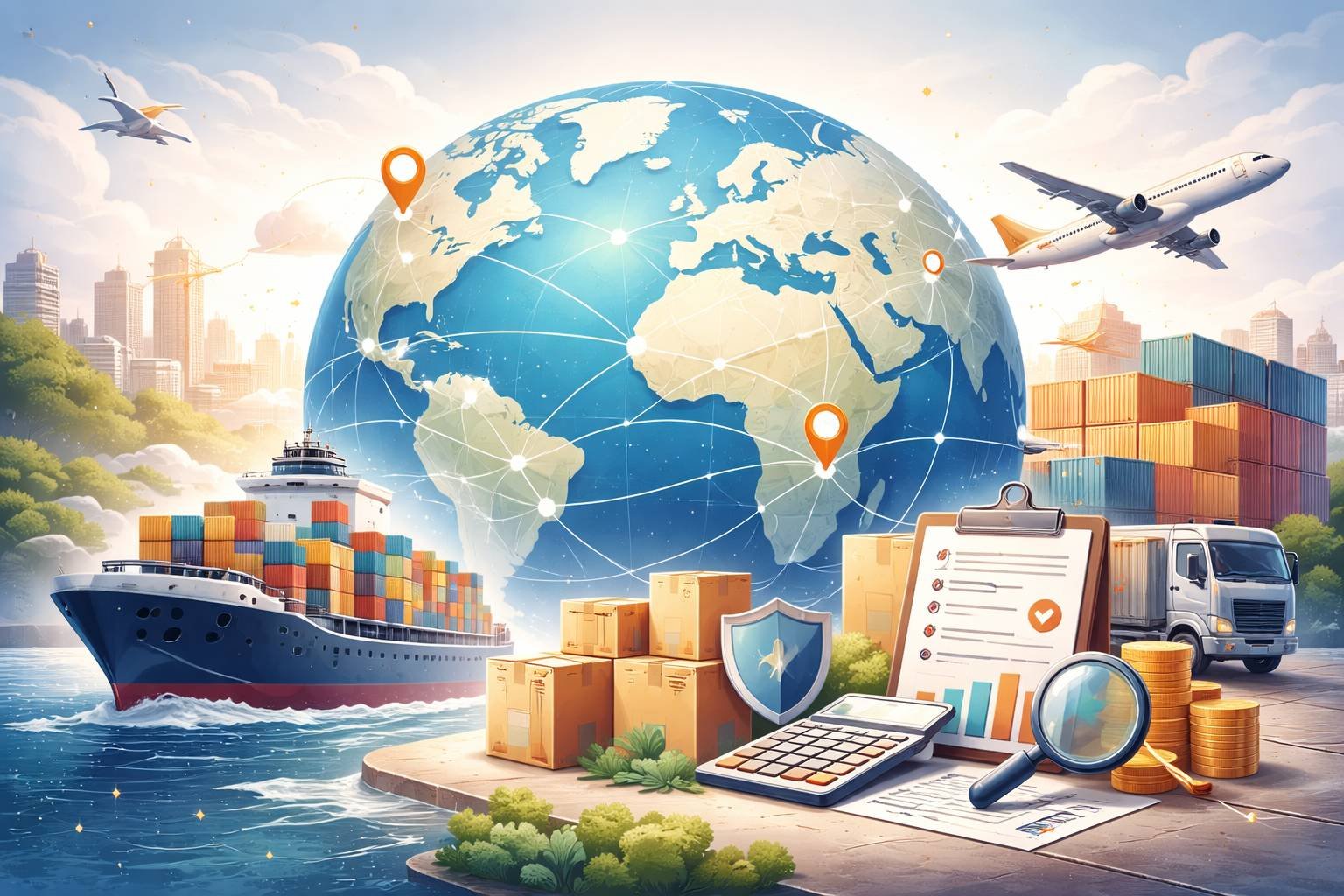
International trade allows businesses to reach customers far beyond their local markets. From understanding tariffs and trade agreements to navigating import and export regulations, global commerce depends on several essential building blocks. This guide breaks down the fundamentals of international trade in clear, practical terms. Discover how supply chains, logistics, and global market access shape modern business growth and how companies of any size can confidently participate in cross-border commerce.
International trade connects businesses, markets, and economies across the world. A small manufacturer in one country can sell products to customers thousands of miles away. A technology company can source components from several continents before building a finished product. This global exchange of goods and services fuels economic growth, innovation, and opportunity.
For businesses of all sizes, understanding how international trade works is essential. Whether you are a startup exploring new markets or an established company expanding globally, the core principles of cross-border commerce remain the same. Concepts like trade agreements, tariffs, import and export regulations, and supply chains form the foundation of global trade.
This guide explains these fundamentals in clear, practical terms so readers can better understand how international trade supports business growth and economic development.
What Is International Trade?
International trade refers to the exchange of goods and services between countries. Instead of producing everything domestically, nations import products they need and export goods they produce efficiently.
For example, a country with strong agricultural resources may export food products while importing advanced technology. Another nation may export machinery or electronics while importing raw materials.
This exchange creates a global marketplace where businesses can reach larger customer bases, reduce production costs, and access specialized resources.
For companies, international trade opens several opportunities:
- Expanding into new global markets
- Diversifying revenue streams
- Accessing international suppliers and resources
- Strengthening competitiveness through innovation
When managed well, cross-border trade allows companies to grow beyond the limits of their local economies.
Why International Trade Matters for Businesses
Businesses that engage in global trade gain access to markets that may be significantly larger than their domestic customer base. This expansion can increase revenue potential and reduce reliance on a single economy.
International trade also encourages efficiency. Companies often specialize in products or services they produce best, while importing goods that are more cost-effective from other regions.
For example, a clothing company may design products domestically but manufacture them overseas where production costs are lower. At the same time, it may export finished products to international markets.
These global connections allow companies to scale operations, strengthen supply networks, and remain competitive in an increasingly interconnected economy.
Understanding Trade Agreements
Trade agreements play a crucial role in shaping how countries conduct business with one another. These agreements are formal arrangements between nations that define the rules of trade.
Their main purpose is to reduce barriers that limit cross-border commerce. By lowering tariffs, simplifying regulations, and promoting fair competition, trade agreements make it easier for companies to operate internationally.
Common types of trade agreements include:
Bilateral Trade Agreements
These agreements involve two countries. They outline trade conditions between the participating nations and often reduce tariffs or trade restrictions.
Regional Trade Agreements
Regional agreements involve several countries within a geographic area. These agreements promote trade cooperation and economic integration across the region.
Multilateral Trade Agreements
These agreements include multiple countries and are designed to create standardized rules for international commerce.
For businesses, trade agreements often mean easier market access, reduced import costs, and clearer legal frameworks for global transactions.
The Role of Tariffs in International Trade
Tariffs are taxes placed on imported goods. Governments use tariffs to regulate trade, protect domestic industries, or generate revenue.
When a product enters a country, the importing government may apply a tariff based on its value, quantity, or classification. This increases the final cost of the imported product.
For businesses involved in global trade, tariffs influence pricing, profitability, and sourcing decisions.
There are several types of tariffs commonly used in international commerce:
- Ad valorem tariffs, calculated as a percentage of the product’s value
- Specific tariffs, charged as a fixed amount per unit
- Protective tariffs, designed to support domestic industries
While tariffs can protect local businesses, they may also increase costs for companies that rely on imported materials or products.
Understanding tariff structures helps businesses plan pricing strategies and manage international trade expenses more effectively.
Import and Export Regulations Explained
Every country regulates how goods enter and leave its borders. These regulations help governments maintain product safety, enforce trade policies, and monitor economic activity.
Import and export regulations often include documentation requirements, product standards, and customs procedures.
Businesses involved in international trade must typically comply with several regulatory steps:
- Preparing shipping documentation
- Declaring goods through customs authorities
- Meeting product safety or certification standards
- Paying applicable duties or tariffs
For example, a food exporter may need to meet health regulations in the destination country, while an electronics importer must follow technical certification requirements.
Compliance with these rules ensures smooth customs clearance and reduces the risk of delays, penalties, or rejected shipments.
How Global Supply Chains Support Trade
A supply chain refers to the network of suppliers, manufacturers, logistics providers, and distributors involved in producing and delivering a product.
In international trade, supply chains often span multiple countries. Raw materials may originate in one region, manufacturing may occur in another, and final products may be sold globally.
Consider the production of a smartphone. Its components may come from several countries before final assembly takes place elsewhere. The finished product is then distributed worldwide.
Global supply chains help businesses achieve:
- Cost efficiency
- Access to specialized manufacturing
- Faster production cycles
- Greater product availability
However, supply chains must be carefully managed to avoid disruptions caused by geopolitical changes, shipping delays, or regulatory shifts.
Strong supply chain planning is essential for companies engaged in global commerce.
Logistics and Transportation in Cross-Border Trade
Transporting goods across borders requires reliable logistics systems. Businesses must coordinate shipping, customs clearance, and distribution across multiple regions.
Common international transportation methods include:
- Ocean freight for large shipments
- Air freight for high-value or time-sensitive goods
- Rail transport across connected land regions
- Truck transport for regional trade routes
Logistics providers help companies manage shipping routes, documentation, and customs procedures. Efficient logistics operations reduce delays and keep global supply chains moving smoothly.
Companies that invest in strong logistics strategies often gain a competitive advantage in international markets.
Risk Management in International Trade
While international trade offers many benefits, it also introduces new risks. Currency fluctuations, political changes, regulatory updates, and transportation disruptions can all affect cross-border business operations.
Businesses manage these risks through several strategies:
- Diversifying supply sources
- Using trade insurance and financial protection tools
- Monitoring regulatory changes in key markets
- Building relationships with trusted international partners
Risk management ensures companies remain stable even when global conditions shift.
Prepared businesses are better positioned to navigate uncertainty while continuing to grow internationally.
Technology and the Future of Global Trade
Technology continues to reshape international trade. Digital platforms, real-time logistics tracking, and advanced data analytics are making cross-border commerce more efficient and transparent.
Modern technologies support global trade in several ways:
- Automated customs documentation
- Blockchain tracking for supply chain transparency
- Artificial intelligence for demand forecasting
- Digital marketplaces connecting international buyers and sellers
These innovations help businesses manage complex global operations while reducing administrative burdens.
As technology evolves, international trade will likely become even more accessible for smaller businesses and emerging entrepreneurs.
Building a Global Trade Strategy
For businesses considering international expansion, success begins with a clear strategy. Entering global markets requires planning, research, and strong partnerships.
Companies should evaluate several key factors before expanding internationally:
- Market demand in target regions
- Trade regulations and tariffs
- Reliable supply chain partners
- Logistics and shipping infrastructure
Developing a well-structured trade strategy helps businesses avoid costly mistakes and build sustainable global operations.
Many successful companies start with one international market and gradually expand as they gain experience and confidence.
Conclusion
International trade is one of the most powerful forces shaping the modern global economy. By connecting markets, resources, and innovation across borders, it creates opportunities for businesses of every size.
Understanding the fundamentals of international trade is the first step toward participating successfully in global commerce. Trade agreements establish the rules of engagement. Tariffs influence pricing and competitiveness. Import and export regulations guide compliance. Supply chains and logistics systems keep goods moving across continents.
When businesses learn how these elements work together, they gain the tools needed to navigate international markets with confidence.
For entrepreneurs, manufacturers, service providers, and technology companies alike, global trade offers a pathway to growth, resilience, and long-term opportunity in an interconnected world.
Frequently Asked Questions (FAQs)
What is international trade and why is it important?
International trade is the exchange of goods and services between countries, allowing businesses to access global markets and resources. It supports economic growth by expanding customer bases, increasing competition, and encouraging innovation. Companies benefit from larger markets, diverse suppliers, and opportunities to scale operations beyond domestic boundaries.
What are trade agreements and how do they affect businesses?
Trade agreements are formal agreements between countries that establish rules for cross-border commerce. They often reduce tariffs, simplify customs procedures, and encourage fair competition. For businesses, these agreements can lower costs, improve market access, and create more predictable conditions for exporting and importing goods internationally.
How do tariffs impact international trade?
Tariffs are taxes placed on imported goods by governments. They can increase the cost of foreign products, protect domestic industries, or generate government revenue. Businesses involved in international trade must account for tariffs when pricing products, choosing suppliers, or entering new markets to maintain profitability.
What is the difference between importing and exporting?
Importing refers to bringing goods or services into a country from abroad, while exporting involves selling domestic products to foreign markets. Many businesses engage in both activities, importing materials for production and exporting finished goods to international customers as part of global trade operations.
What role do supply chains play in global trade?
Supply chains connect suppliers, manufacturers, logistics providers, and distributors involved in producing and delivering products worldwide. In international trade, supply chains often span multiple countries. Efficient supply chain management ensures products move smoothly across borders while maintaining cost efficiency and reliable delivery.
How can small businesses start participating in international trade?
Small businesses can enter international markets by researching demand in foreign regions, understanding import and export regulations, and partnering with reliable logistics providers. Many companies begin with a single export market before expanding globally, allowing them to gain experience while gradually building international trade capabilities.