

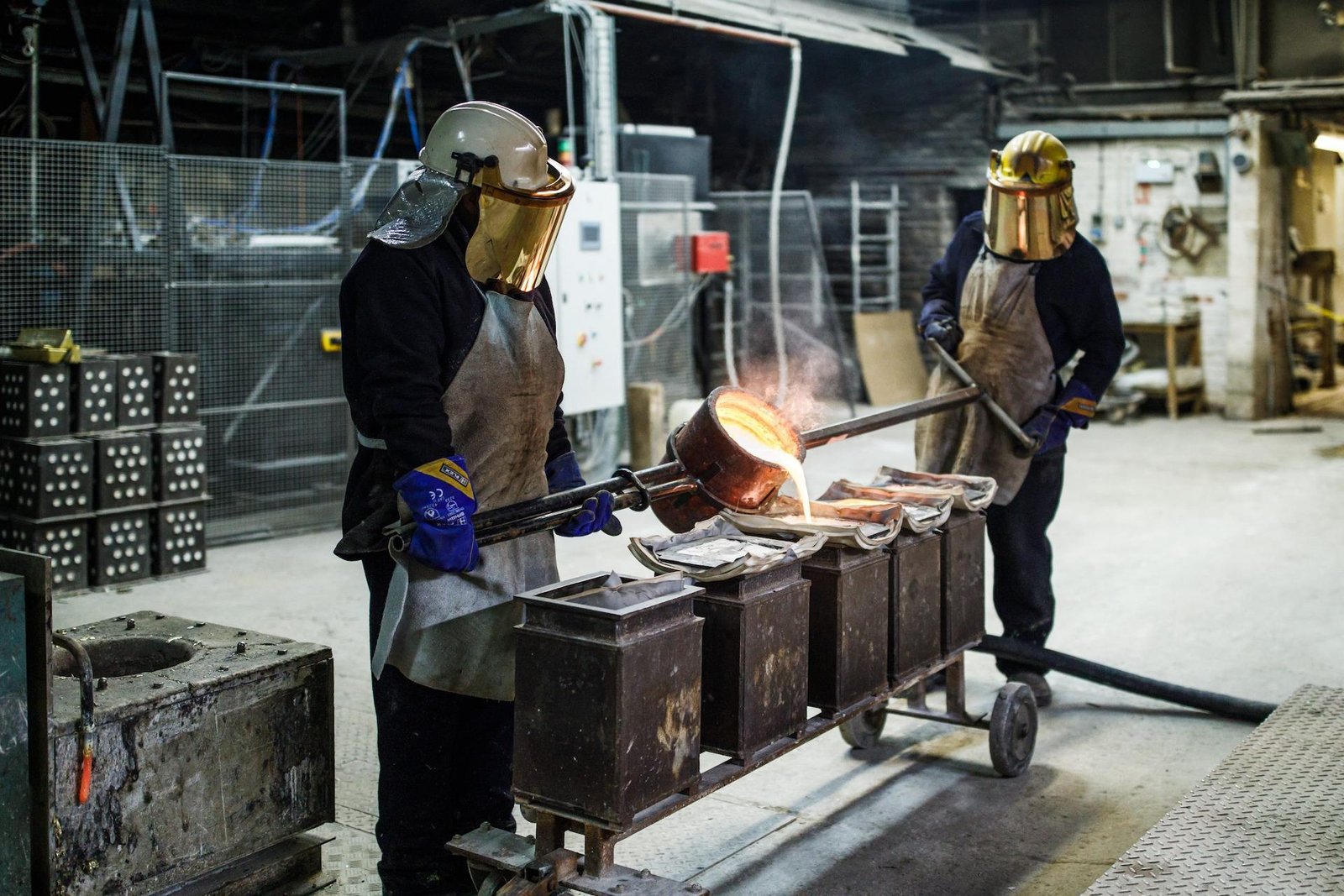
Investment casting is widely used when components demand dimensional accuracy, complex geometry, and consistent metallurgical quality. Its relevance spans industries where performance, repeatability, and material integrity are critical. However, the real strength of the process lies not only in the final component, but in how effectively it supports the journey from early-stage prototyping through to stable, high-volume production.
This article examines how Investment Casting supports that full lifecycle, using the structured, process-led approach followed by manufacturers. The focus here is on engineering logic, process flow, and technical continuity rather than commercial positioning.
The Role of Prototyping in Investment Casting
Prototyping is often the most technically sensitive phase of component development. At this stage, engineers are validating form, fit, and function while also assessing manufacturability. Investment casting is well-suited to this phase because it allows designers to test near-final geometries without committing to extensive machining or tooling changes.
Wax pattern tooling used during prototyping can be adapted more easily than permanent moulds, allowing refinement of geometry, wall thickness, and internal features with minimal disruption. This flexibility supports iterative development while maintaining alignment with production-ready processes.
Importantly, prototypes produced through investment casting reflect real production conditions. This allows engineers to assess material behaviour, surface finish, and dimensional stability under realistic constraints.
Design Validation and Process Alignment
A critical transition point between prototyping and production is design validation. Components that perform well in isolation may still present challenges during repeat manufacturing if design choices do not align with casting behaviour.
During this phase, design reviews typically focus on:
- Metal flow and solidification paths
- Section thickness consistency
- Fillets, radii, and stress distribution
- Tolerance feasibility
The objective is to ensure that the prototype design can be reproduced consistently at scale without compromising yield or quality. Adjustments made at this stage often reduce long-term production risk.
Tooling Development for Scalable Production
Once a design is validated, tooling becomes the foundation for repeatability. In investment casting, tooling is primarily used to produce wax patterns that must remain dimensionally stable throughout extended production runs.
Tooling design considers:
- Shrinkage allowances
- Pattern ejection forces
- Wax flow behaviour
- Long-term dimensional consistency
Effective tooling bridges the gap between development and volume production, ensuring that the transition does not introduce variability into the process.
Material Selection and Metallurgical Control
Material behaviour plays a decisive role throughout the casting lifecycle. Investment casting supports a wide range of alloys, including carbon steels, stainless steels, alloy steels, aluminium alloys, and nickel-based materials.
From prototyping onwards, maintaining material consistency is essential. Changes in alloy specification late in the process can require redesign of gating systems, wall thickness, or heat treatment cycles.
Metallurgical control typically focuses on:
- Chemical composition accuracy
- Grain structure development
- Mechanical property consistency
By maintaining material continuity from early samples through to production batches, performance data gathered during prototyping remains valid.
Process Control During Scale-Up
Scaling from prototype quantities to serial production introduces new challenges. Increased volumes amplify any process variability. As a result, process control becomes increasingly important.
Key control areas include:
- Shell building consistency
- Pouring temperature stability
- Cooling and solidification control
- Post-casting heat treatment
Monitoring and documenting these parameters supports predictable outcomes and simplifies quality assurance during production ramp-up.
Quality Assurance Across the Production Lifecycle
Quality requirements do not begin at production; they start during prototyping. Dimensional inspection, visual evaluation, and non-destructive testing provide early insight into potential issues.
As production volumes increase, quality systems typically expand to include:
- Statistical process control
- Routine dimensional audits
- Material certification verification
Designs that consider inspection access and measurement reference points from the outset tend to integrate more smoothly into production quality systems.
Managing Design Changes Without Disruption
Design changes are common during product development, but they become increasingly costly as production progresses. One advantage of investment casting is its relative adaptability compared to fixed tooling processes.
Minor design refinements can often be accommodated through:
- Pattern tooling modifications
- Gating system adjustments
- Controlled machining allowances
This adaptability helps manage late-stage changes without requiring complete process redevelopment, provided changes remain within casting constraints.
Achieving Consistency in High-Volume Production
Once production stabilises, the primary objective becomes consistency. Investment casting supports this through controlled process parameters and repeatable tooling.
Consistency depends on:
- Stable wax pattern production
- Uniform shell thickness
- Controlled pouring practices
- Standardised finishing operations
When these elements are aligned, investment casting delivers repeatable components with predictable performance characteristics.
Long-Term Production and Continuous Improvement
Investment casting is not static. Even after production is established, opportunities for refinement remain. Data gathered from inspection results, machining feedback, and in-service performance can inform incremental improvements.
Continuous improvement efforts may focus on:
- Yield optimisation
- Weight reduction
- Reduced post-processing
- Improved surface finish consistency
Such refinements extend the value of the original design while maintaining production stability.
Conclusion
The journey from prototype to production is where many manufacturing processes succeed or fail. Investment casting supports this transition by combining design flexibility with production discipline. When prototypes are developed with manufacturing realities in mind, scale-up becomes a controlled progression rather than a disruptive leap.
By maintaining continuity in design intent, material selection, and process control, Investment Casting enables engineers to move confidently from early validation to long-term production, delivering components that meet functional, dimensional, and quality expectations across their entire lifecycle.