

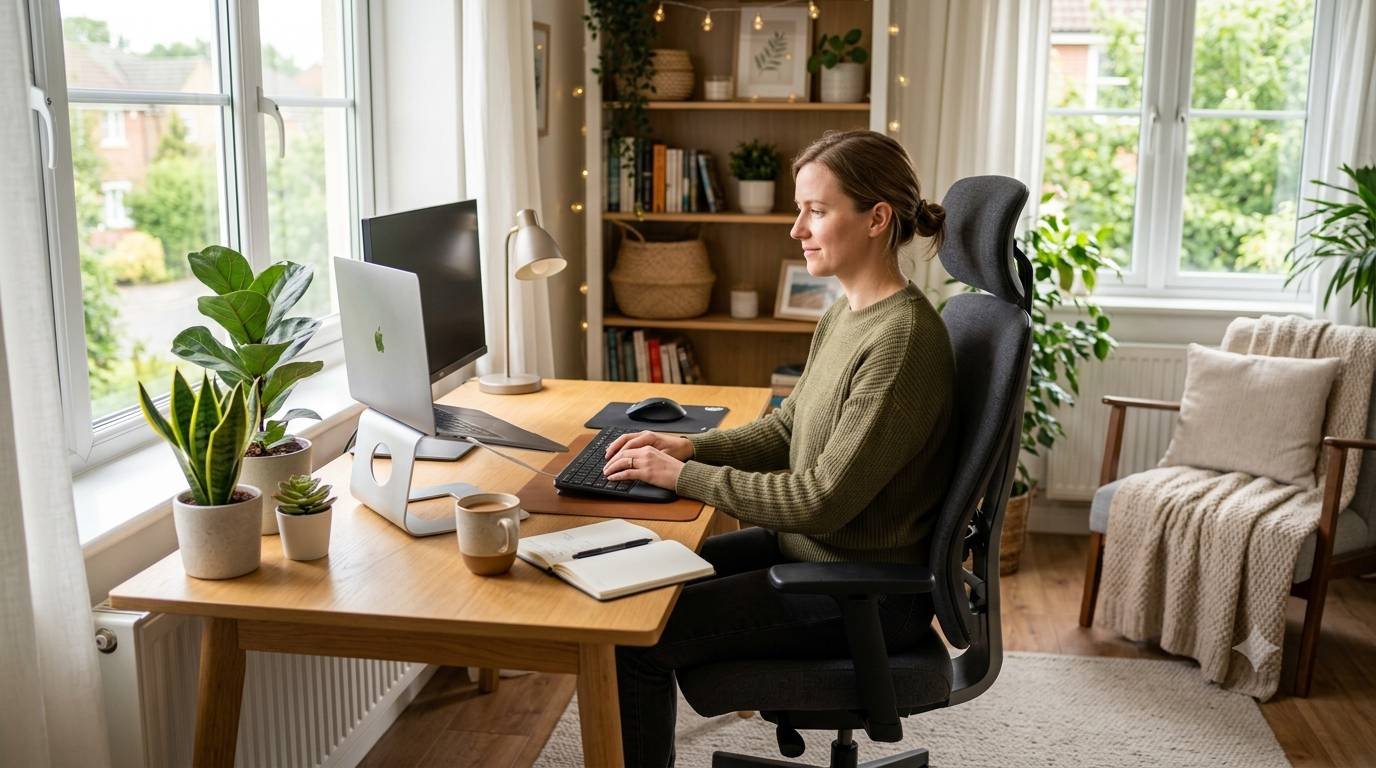
Working from home offers plenty of freedom, but long hours at a desk can quickly become uncomfortable if your workspace isn’t set up properly. Choosing supportive home office chairs is a good place to start, but comfort depends on much more than where you sit. From desk height and screen position to lighting and small personal touches, a few thoughtful changes can make your home office a far more pleasant place to spend the workday.
Start With the Right Chair
Your chair is one of the most important parts of your home workspace, especially if you spend several hours sitting each day. A suitable chair should offer enough support while allowing you to adjust your position throughout the day.
Look for features such as adjustable seat height, good lumbar support, and enough space to sit comfortably without feeling restricted. Your feet should rest flat on the floor, while your knees should sit at roughly a right angle. If your feet do not reach the floor comfortably, a footrest can provide useful extra support.
Also avoid sitting in the same position for hours. Even a well-designed chair cannot compensate for a completely static working posture.
Get Your Desk Height Right
A desk that is too high or too low can strain your shoulders, wrists, and neck. Ideally, your desk should let your forearms rest comfortably while your elbows stay close to your body.
When typing, keep your wrists in a relaxed, neutral position rather than bending them upwards or downwards. If your desk is not adjustable, you can sometimes improve your position by raising your chair or using a keyboard and mouse separately from a laptop.
The goal is to create a setup that feels natural rather than forcing your body into an awkward position.
Position Your Screen Carefully
Looking down at a laptop for hours can leave your neck feeling stiff and tired. Position your screen so the top of the display is around eye level or slightly below.
A laptop stand, monitor riser, or even a stable stack of books can help bring the screen to a more suitable height. If you use a raised laptop, consider adding a separate keyboard and mouse so that your arms can remain in a comfortable position.
Try to keep your screen at a sensible distance, too. You should be able to read text without leaning forward or constantly moving closer.
Pay Attention to Lighting
Good lighting can make a surprisingly large difference to how comfortable your workspace feels. Natural daylight is ideal when possible, especially when your desk is near a window without creating distracting glare on the screen.
During darker hours, use a desk lamp or another suitable light source to illuminate your working area. Avoid relying solely on a bright screen in an otherwise dark room, as the contrast can make your eyes feel more tired.
Adjust blinds or curtains throughout the day if sunlight begins reflecting directly onto your display.
Keep Your Workspace Tidy
A cluttered desk can make it harder to concentrate and may make it feel like your workday never really ends. Keeping only the essentials within easy reach can create a calmer and more organised environment.
Cable management is another simple improvement. Clips, cable sleeves, or simple ties can prevent wires from tangling across your desk or floor. Keeping chargers, notebooks, and other frequently used items in consistent places also makes your workspace easier to manage.
Add a Few Personal Comforts
Comfort is not only about posture and furniture. Small details can affect how enjoyable your workspace feels throughout the day.
A plant, framed print, soft desk mat, or favorite mug can add personality without being distracting. If you work in a particularly warm or cold room, pay attention to ventilation and temperature as well. A comfortable environment makes it easier to stay focused without constantly adjusting your surroundings.
Build Movement Into Your Day
One of the simplest ways to make working from home more comfortable is to avoid staying at your desk continuously. Stand up regularly, stretch your legs, refill your water bottle, or take a short walk between tasks.
Brief movement breaks can help break up long periods of sitting and give your eyes a rest from the screen. You could also take phone calls while standing or walk around during audio meetings when appropriate.
Conclusion
No single home office arrangement is perfect. The best setup supports your working habits, your space, and your comfort throughout the day. A supportive chair, correctly positioned screen, suitable lighting, and regular movement can make a noticeable difference without requiring a complete redesign of your home.
Instead of creating a picture-perfect office, focus on making the space practical, comfortable, and easy to use. Small improvements often add up to a workspace that feels much better day after day.