

Defining the Scope of Professional Development
Leaders often stand at the top, facing immense pressure and making critical decisions. Yet, they frequently do so in isolation. Honest feedback can be rare, creating a unique challenge: when leadership development stalls, the entire organization risks stagnation. We understand that effective leadership and executive coaching is not a luxury for a select few. Instead, it’s a vital tool for those navigating complex environments.
This comprehensive guide will explore how structured leadership and executive coaching can fundamentally transform an organization’s culture. We will show how it helps leaders move beyond simple management to achieve greater leadership clarity to execution. The ripple effect of strong executive development is profound, impacting everything from team performance to overall trust and engagement.
Join us as we delve into the core mechanics, measurable benefits, and future trends shaping this powerful approach to leadership growth.
Executive coaching stands apart from many traditional forms of leadership development. While workshops and seminars offer valuable group learning experiences, executive coaching provides a highly personalized, confidential, and targeted approach to growth. It’s a dedicated partnership between a leader and a qualified coach, designed to unlock individual potential and drive measurable improvements in performance and behavior.
Differentiating Coaching from Standard Development
Traditional leadership development often focuses on imparting knowledge or skills to a group. Think of it as a broad curriculum designed to elevate a general competency. Executive coaching, however, is akin to a bespoke educational journey. It’s tailored to the unique strengths, challenges, and aspirations of an individual leader within their specific organizational context.
The support offered is deeply personalized, addressing not just observable skills but also underlying thought patterns, beliefs, and motivations. This deep dive fosters long-term behavioral change, unlike the often temporary impact of generic training. Furthermore, the confidential nature of executive coaching creates a safe space for leaders to explore vulnerabilities, tackle complex issues, and experiment with new approaches without fear of judgment or professional repercussions. This environment is crucial for fostering genuine self-reflection and growth.
The Role of the Coach as a Sounding Board
A key aspect of executive coaching is the coach’s role as an objective, unbiased sounding board. Leaders, especially those at senior levels, often find themselves in positions where honest, unfiltered feedback is scarce. Direct reports may hesitate to speak candidly, and peers might be perceived as competitors. The executive coach fills this void, offering an external perspective that challenges assumptions, provokes deeper thought, and helps leaders see situations from new angles.
This partnership is built on trust and mutual respect, allowing for strategic alignment between the leader’s personal development goals and the organization’s broader objectives. The coach doesn’t provide answers but rather facilitates the leader’s own discovery process, empowering them to find sustainable solutions and build lasting capabilities.
Here’s a brief comparison to illustrate the distinctions:
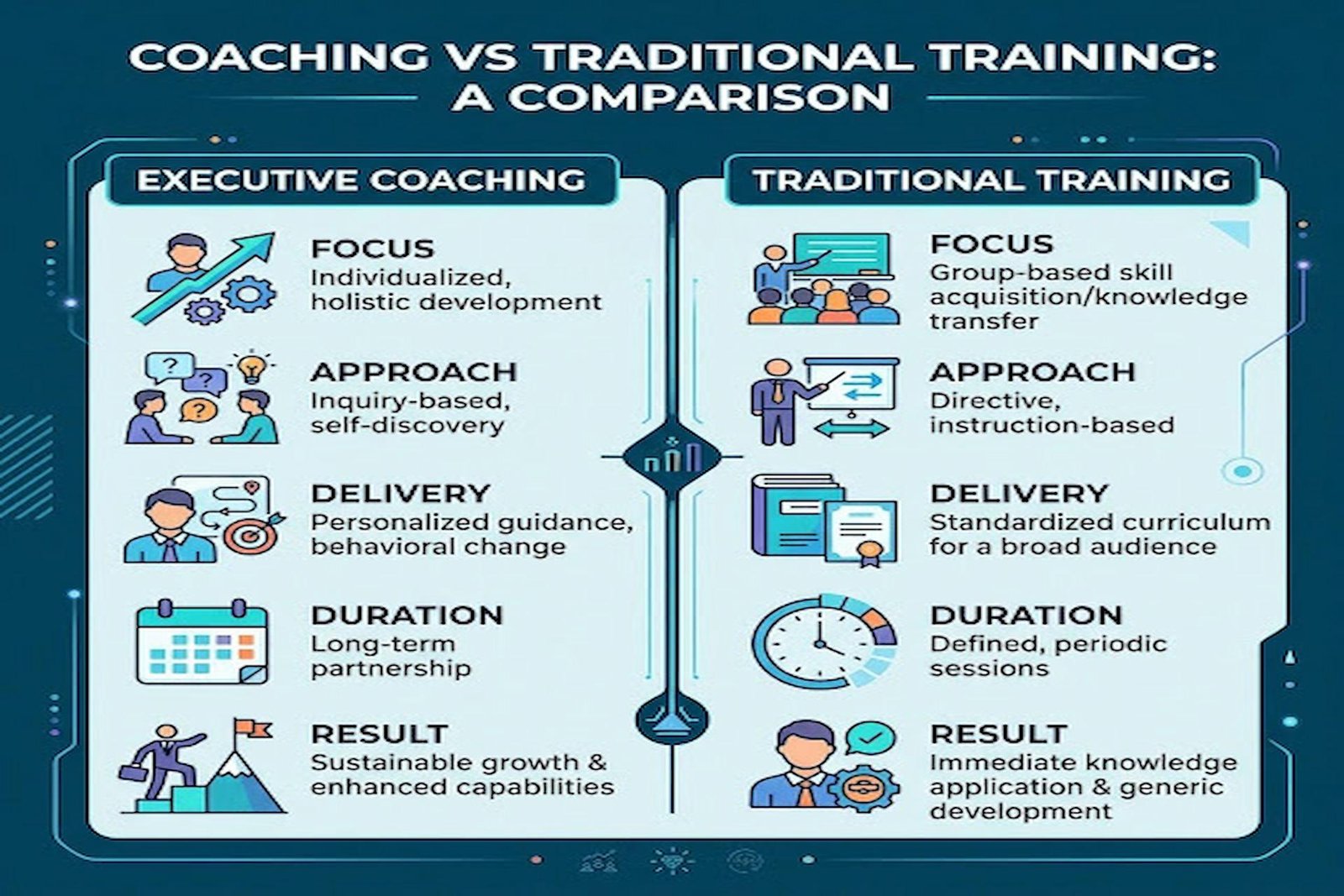
Feature Executive Coaching Traditional Training/Workshops Focus Individualized, holistic development Group-based skill acquisition/knowledge transfer Approach Inquiry-based, self-discovery, behavioral change Directive, instruction-based, content delivery Content Tailored to specific leader and context Standardized curriculum for a broad audience Relationship Confidential, partnership, objective sounding board Instructor-student, often one-to-many Duration Long-term (months to years), ongoing support Short-term (hours to days), episodic Goal Sustainable transformation, self-awareness, growth Specific skill mastery, knowledge update Feedback 360-degree, personalized, continuous General, often limited to course performance The Mechanics of Leadership and Executive Coaching
Executive coaching is a dynamic process designed to cultivate profound leadership improvements. It operates on the principle that effective leadership stems from a deep understanding of oneself and one’s impact on others. This involves a journey from inner reflection to outward action, leading to tangible enhancements in performance and organizational health.

Building Self-Awareness Through Leadership and Executive Coaching
One of the most profound benefits of executive coaching is its ability to build self-awareness. Leaders, like all individuals, have blind spots – areas where their self-perception doesn’t align with how others perceive them. These blind spots can hinder effectiveness, damage relationships, and impede career progression. Coaching employs various tools and techniques, such as 360-degree feedback assessments, to bring these hidden areas to light. By gathering detailed feedback from peers, subordinates, and superiors, leaders gain a comprehensive view of their strengths and development opportunities.
This process often involves reflective inquiry, where a coach asks probing questions that encourage deep introspection. Leaders are guided to explore their limiting beliefs – those unconscious assumptions or narratives that hold them back. By challenging these beliefs and understanding their origins, leaders can begin to rewrite their internal scripts, fostering a more authentic and empowering leadership style. The focus is often on an “inner core” of character, values, and self-concept, recognizing that superficial behavioral changes are less sustainable without addressing these deeper elements. Once the inner core is strengthened, outer skills and competencies naturally transform.
Scaling Impact with Leadership and Executive Coaching
While executive coaching focuses on individual leaders, its impact scales significantly across the organization. A leader who develops greater self-awareness, improved communication skills, and enhanced strategic thinking doesn’t just benefit themselves; they create a ripple effect.
- Team Performance: Coached leaders are better equipped to build high-performing teams. They learn to foster psychological safety, delegate effectively, provide constructive feedback, and inspire collective action. This translates into improved team cohesion, productivity, and innovation. When leaders understand their own impact, they can better understand and influence team dynamics, leading to a more engaged and effective workforce. Research shows that employees who strongly agree they trust their organization’s leadership are four times as likely to be engaged and 7.7 times as likely to feel connected to the organizational culture.
- Organizational Change: In today’s rapidly evolving business landscape, organizations constantly undergo change. Executive coaching equips leaders with the agility, resilience, and strategic foresight needed to navigate complex transformations. By developing leaders who can anticipate challenges, adapt quickly, and communicate vision effectively, coaching significantly increases the likelihood of successful organizational change initiatives. Indeed, research indicates that coaching senior leaders can increase the likelihood of transformation success by more than 70%.
- Stakeholder Alignment: Effective leadership extends beyond internal teams to encompass a wide range of stakeholders, from board members to customers and partners. Coaching helps leaders refine their ability to influence, negotiate, and build consensus, ensuring that diverse interests are aligned with organizational goals. This holistic development, often through global executive leadership coaching, ensures leaders are prepared to lead across varied cultural and operational landscapes.
Structuring Effective Coaching Engagements
The effectiveness of executive coaching lies not only in the expertise of the coach but also in the thoughtful structure of the engagement. Modern coaching programs are designed to be flexible, comprehensive, and deeply integrated with a leader’s professional life, incorporating various formats and cutting-edge methodologies.
Formats for Modern Leadership Needs
Executive coaching has evolved to meet the diverse needs of today’s leaders and organizations.
- One-on-One Coaching: This is the most traditional and common format, involving private, confidential sessions between a leader and their coach. It allows for highly personalized attention, deep dives into individual challenges, and tailored development plans. Sessions are typically held every few weeks over several months, ensuring sustained progress.
- Team Coaching: Recognizing that leadership often happens within a collective, team coaching focuses on improving the dynamics, communication, and overall performance of an executive team. The coach works with the entire group to identify collective blind spots, enhance collaboration, and align around shared objectives, ultimately strengthening the team’s ability to drive organizational success.
- Onboarding Coaching: For leaders transitioning into new roles or organizations, onboarding coaching provides critical support during the crucial first 90-100 days. This specialized coaching helps new executives quickly understand the culture, build key relationships, clarify their mandate, and accelerate their impact, significantly reducing the risk of early-stage failure.
- Virtual and Hybrid Models: The advent of technology has made coaching more accessible and flexible than ever. Virtual sessions, conducted via video conferencing, remove geographical barriers and allow busy executives to integrate coaching into their schedules more easily. Hybrid models combine virtual sessions with occasional in-person meetings or intensive retreats, offering the best of both worlds. This global scalability ensures that leaders, regardless of their location, can access top-tier coaching expertise.
The Integration of Neuroscience and Feedback
Leading executive coaching programs leverage scientific insights to maximize impact.
- Neuroscience-Based Methods: Understanding how the brain works provides a powerful foundation for coaching. Neuroscience informs techniques that help leaders manage stress, regulate emotions, enhance decision-making, and build resilience. Concepts like neuroplasticity (the brain’s ability to change) underscore the potential for lasting behavioral transformation through consistent coaching. Some advanced programs even incorporate somatic coaching, which emphasizes the connection between mind and body, helping leaders become more aware of their physical responses to situations and use this awareness to lead more effectively.
- Multi-Source Feedback Tools: Beyond traditional 360-degree feedback, coaches utilize a range of assessment tools to provide data-driven insights. These might include personality assessments (e.g., CliftonStrengths for identifying natural talents), emotional intelligence inventories, or proprietary leadership competency models. These tools offer objective data points that complement the coach’s observations and the leader’s self-reflection, creating a comprehensive picture of development needs and progress.
- Data-Driven Insights: Modern coaching isn’t just about conversation; it’s increasingly about measurable data. Platforms often track progress against goals, provide anonymized feedback trends, and offer insights into leadership effectiveness over time. This data allows both the leader and the organization to see tangible results and adjust strategies as needed, ensuring the coaching remains relevant and impactful.
Measuring the Return on Coaching Investments
Organizations invest in executive coaching with a clear expectation of return. While some benefits, like improved morale, can be qualitative, a significant body of evidence demonstrates the tangible, measurable impact of effective coaching on individual leaders and the organization as a whole.
Quantifying Leadership Effectiveness
The success of executive coaching can be quantified in several key areas:
- Improved Leadership Effectiveness: Post-coaching, leaders consistently report significant improvements. Research indicates that clients average a 57% measurable improvement in leadership effectiveness. This translates into better decision-making, more effective communication, and a stronger ability to inspire and guide teams.
- Higher Goal Attainment: Coaching provides leaders with the clarity, strategies, and accountability needed to achieve their objectives. Studies show that 91% of leaders achieve higher goal attainment after coaching. This directly impacts business outcomes, as leaders are more successful in executing strategic initiatives and reaching performance targets.
- Increased Capability and Performance: Beyond specific goals, coaching builds overall leadership capability. Statistics highlight remarkable gains: an 81% increase in leadership capability, a 70% boost in job performance, and a 68% drive toward greater business success. Furthermore, 72% of coached leaders strengthen their ability to lead under pressure, a critical skill in today’s volatile environment.
- Transformation Success: For organizations undergoing significant change, executive coaching is a catalyst. As noted earlier, coaching senior leaders can increase the likelihood of transformation success by more than 70%. This demonstrates coaching’s direct link to strategic organizational achievements.
These statistics underscore that executive coaching is not merely a soft skill development tool but a powerful driver of concrete business results.
Impact on Organizational Culture and Trust
The benefits of executive coaching extend beyond individual performance to profoundly shape the organizational culture:
- Enhanced Engagement Levels: When leaders are more effective, self-aware, and communicative, they foster environments where employees feel valued and heard. This leads to higher employee engagement. Employees who strongly agree they trust their organization’s leadership are four times as likely to be engaged, creating a more dynamic and productive workforce.
- Stronger Cultural Connection: Leaders who embody trust, compassion, stability, and hope (as identified by strengths-based coaching approaches) create a magnetic culture. Employees are 7.7 times as likely to feel connected to the organization’s culture when they trust their leaders. This deep connection reduces feelings of isolation and fosters a sense of belonging.
- Reduced Turnover and Increased Retention: A positive, trust-filled culture, driven by effective leadership, is a powerful retention tool. Employees are 58% less likely to be actively looking for another job when they trust their leadership. This significantly reduces recruitment costs and preserves institutional knowledge, contributing directly to the bottom line.
- High-Trust Environments: Executive coaching cultivates high-trust environments where collaboration thrives, innovation flourishes, and individuals feel empowered to contribute their best work. This cultural transformation is a sustainable competitive advantage, making the organization an employer of choice and a leader in its industry.
The data consistently shows that investing in executive coaching yields substantial returns, not just in individual performance metrics but in the very fabric of the organization’s culture and its long-term success.
Future Trends in Executive Development
The landscape of executive coaching is continuously evolving, driven by technological advancements and changing organizational needs. As businesses become more global, agile, and data-centric, so too must the approaches to leadership development.
The Rise of Digital Coaching Platforms
Digital platforms are revolutionizing how executive coaching is delivered and managed. These platforms offer:
- Instant Scheduling and Accessibility: Busy executives can schedule sessions quickly, often through their assistants, and access coaching from anywhere in the world. This flexibility is crucial for leaders with demanding travel schedules or those working across different time zones.
- Anonymized Data and Insights: Digital platforms can aggregate anonymized data from multiple coaching engagements, providing organizations with valuable insights into overall leadership trends, common development needs, and the collective impact of coaching initiatives. This data helps organizations make more informed decisions about their talent strategies.
- Scalable Solutions: For large enterprises, digital platforms enable the scalable deployment of coaching programs across hundreds or even thousands of leaders. This ensures consistent quality and methodology while maintaining the personalized nature of one-on-one coaching.
- Global Cohesion: With coaches and coachees located worldwide, digital platforms facilitate global cohesion, allowing leaders in different regions to receive consistent, high-quality development support tailored to their specific contexts.
AI and the Evolution of Leadership Support
Artificial intelligence (AI) is poised to play an increasingly significant role in executive coaching, enhancing both the delivery and effectiveness of programs:
- Predictive Insights: AI can analyze vast amounts of data—from performance reviews to communication patterns—to identify potential leadership challenges or development needs before they become critical. This allows for more proactive and preventive coaching interventions.
- Personalized Learning Paths: AI algorithms can recommend highly personalized learning resources, exercises, and micro-learning modules based on a leader’s specific development goals, learning style, and progress. This creates a dynamic and adaptive learning experience.
- Continuous Feedback and Reinforcement: AI-powered tools can provide real-time feedback on communication, meeting effectiveness, or team sentiment, offering continuous support between coaching sessions. This reinforces learned behaviors and helps leaders integrate new skills more quickly.
- Adaptive Frameworks: AI can help coaches and organizations refine their coaching frameworks, identifying which methodologies and interventions are most effective for different types of leaders or organizational challenges. This leads to more evidence-based and impactful coaching practices.
While AI will augment coaching, the human element of empathy, intuition, and deep relational trust will remain irreplaceable. The future likely lies in a powerful synergy between human coaches and intelligent digital tools, creating a more efficient, scalable, and impactful executive development ecosystem.
Frequently Asked Questions About Leadership and Executive Coaching
As organizations increasingly recognize the value of leadership and executive coaching, common questions often arise. Here, we address some of the most frequent inquiries to provide greater clarity.
How does executive coaching differ from mentoring?
While both executive coaching and mentoring are valuable for professional development, they serve distinct purposes. Mentoring is typically advice-based, where an experienced individual (the mentor) shares their knowledge, insights, and career guidance with a less experienced person (the mentee). The mentor often has direct experience in the mentee’s field or role and acts as a role model.
Executive coaching, conversely, is inquiry-based. The coach’s primary role is not to provide answers or advice but to ask powerful questions that help the leader discover their own solutions, insights, and development paths. Coaches facilitate self-discovery, challenge assumptions, and hold leaders accountable for their chosen actions. While a coach may draw on their own leadership experience, the focus remains on the coachee’s agenda and growth, making it a more self-directed and transformative process.
What is the typical duration of a coaching program?
The duration of an executive coaching program can vary depending on the individual’s goals, the complexity of the challenges, and the organizational context. However, most effective engagements are not short-term fixes. They typically last a minimum of six months and often extend to nine or twelve months. This timeframe allows for sufficient time to build rapport, conduct assessments, set meaningful goals, implement new behaviors, and observe sustainable change. Sessions are commonly held bi-weekly or monthly, lasting between 60 to 90 minutes. This consistent, spaced-out approach is crucial for embedding new habits and fostering lasting transformation.
How do organizations measure the success of coaching?
Measuring the success and return on investment (ROI) of executive coaching is critical for organizations. Success is typically measured through a combination of qualitative and quantitative metrics:
- 360-Degree Feedback Shifts: One of the most common and effective methods is to compare 360-degree feedback results before and after a coaching engagement. Significant positive shifts in ratings from peers, subordinates, and superiors on specific leadership competencies indicate improved effectiveness.
- Goal Attainment Rates: Coaching programs often begin with clearly defined, measurable goals. Tracking the achievement of these goals—whether they relate to specific projects, team performance, or personal development objectives—provides concrete evidence of success.
- Employee Engagement Scores: As discussed, effective leadership directly impacts employee engagement. Organizations can measure improvements in team or departmental engagement scores, retention rates, and reductions in absenteeism as indicators of coaching success.
- Performance Metrics: For certain roles, direct business performance metrics (e.g., sales figures, project completion rates, customer satisfaction) can be linked to a leader’s coaching outcomes.
- Qualitative Feedback: Testimonials from the leader, their manager, and key stakeholders provide valuable qualitative insights into the perceived impact of coaching on leadership style, decision-making, and overall contribution to the organization.
By combining these various data points, organizations can gain a comprehensive understanding of the tangible benefits and ROI of their executive coaching investments.
Conclusion
Leadership and executive coaching is about closing the gap between who you are as a leader and who the organization truly needs you to be. It requires a profound commitment to understanding and developing your “inner core”—your values, beliefs, and authentic self—which then naturally transforms your outward behaviors and skills. Real, sustainable change doesn’t happen by chance; it starts with deep self-awareness and culminates in a culture where people not only perform but genuinely want to belong.
The insights and data consistently demonstrate that executive coaching is a powerful catalyst for individual growth and organizational transformation. It fosters trust, enhances engagement, drives measurable improvements in leadership effectiveness, and significantly contributes to the success of strategic initiatives. In an increasingly complex world, the ability to lead with clarity, adaptability, and authenticity is paramount.
The next step is simple: stop guessing about your leadership impact and start measuring it. Embrace the journey of self-discovery and strategic development that executive coaching offers, and witness the profound positive ripple effect it creates throughout your organization.