


Defining the Core Elements of a Strong Workplace Culture

Workplace culture is much more than just a set of values on a wall. It shapes how employees interact, feel about their work, and perform every day. Research shows that culture is a critical driver of success. A toxic workplace culture was a leading reason for employee turnover during the Great Resignation. It was even more impactful than compensation in predicting who would leave.
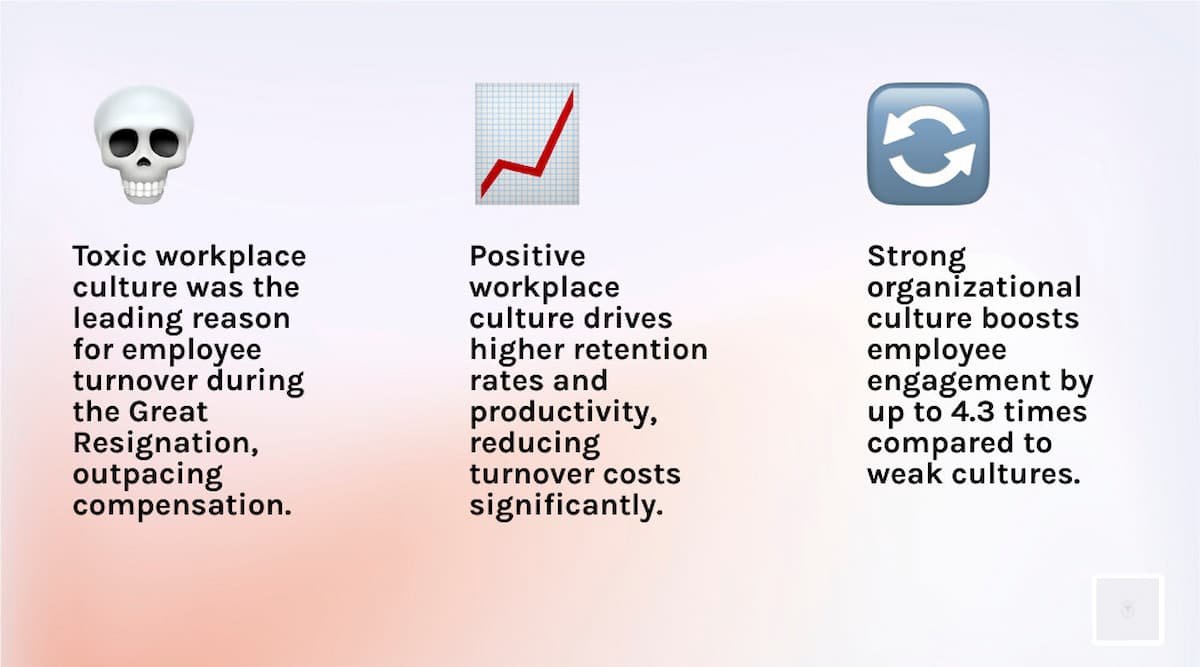
On the other hand, a positive culture can transform an organization. It boosts engagement, retention, and productivity. We believe that understanding and nurturing a strong culture is key to a thriving business.
In this extensive guide, we will explore the deep connection between workplace culture and successful operations. We will define what makes a culture strong and how leaders can shape it. We will also examine how culture impacts employee engagement, retention, and productivity. Finally, we will share practical steps leaders can take to build and manage a positive environment, including the role of recognition and shared spaces. Our goal is to provide insights for creating workplaces where everyone can thrive.
Workplace culture, at its heart, is the collective personality of an organization. It’s the sum of shared attitudes, beliefs, priorities, and values that guide how individuals interact and how work gets done. This intangible yet powerful force dictates everything from daily decision-making to communication styles and even dress codes. A strong culture isn’t just about having a pleasant atmosphere; it provides the context for an organization’s mission, vision, goals, and strategies, making it essential for overall success.

Several key elements define a robust and positive workplace culture:
- Shared Beliefs and Values: These form the bedrock of culture. When employees understand and align with the company’s core principles, it fosters a sense of unity and purpose. These values should be clearly articulated and consistently demonstrated by leadership.
- Psychological Safety: This is the belief that one can speak up, ask questions, or make mistakes without fear of punishment or humiliation. It’s crucial for innovation, learning, and open communication. When employees feel safe, they are more likely to contribute their best ideas and engage authentically.
- Leadership Influence: Leaders are the primary architects and custodians of culture. Their behaviors, decisions, and communication styles set the tone for the entire organization. By modeling desired values and holding themselves and others accountable, leaders profoundly shape the cultural landscape.
- Inclusive Practices: A strong culture embraces diversity and ensures that all employees feel valued, respected, and have equal opportunities to contribute and grow. This goes beyond mere representation to active efforts in fostering belonging and equity.
- Professional Development and Growth: Organizations that invest in their employees’ learning and development signal that they value their people. This commitment not only enhances skills but also boosts morale and retention, as employees see a future for themselves within the company.
- Value-Based Decision-Making: When decisions, from hiring to strategy, are consistently rooted in the organization’s stated values, it reinforces the authenticity and strength of the culture. This alignment builds trust and predictability.
Beyond these foundational elements, workplace cultures often fall into distinct categories, each with its own characteristics:
- Clan Culture: Often described as a “family-like” environment, clan cultures prioritize collaboration, teamwork, and strong interpersonal relationships. They foster a sense of belonging and mutual support, often seen in smaller, family-owned businesses.
- Adhocracy Culture: Characterized by dynamism, creativity, and risk-taking, adhocracy cultures thrive on innovation and adaptability. They empower employees to experiment and challenge the status quo, common in tech startups.
- Hierarchy Culture: These are traditional, structured environments with clear lines of authority, roles, and procedures. Efficiency, stability, and control are paramount, often found in large, established organizations or regulated industries.
- Market-Driven Culture: Focused on results, competition, and achieving external goals, market cultures are driven by outcomes and market dominance. They are often aggressive and demanding, with a strong emphasis on performance metrics.
Understanding these types helps organizations identify their current state and strategically plan for desired cultural shifts. Building a positive culture requires continuous effort, especially in today’s diverse and often distributed work environments. Thoughtful gestures, such as providing remote workplace culture gifts, can play a significant role in fostering connection and appreciation among team members, regardless of their physical location. These tangible expressions of gratitude help reinforce shared values and a sense of belonging, ensuring that even employees working remotely feel deeply integrated into the organizational fabric.
The Intersection of Workplace Culture and Operations
Workplace culture is not merely a soft HR concern; it is a critical operational lever that directly influences an organization’s efficiency, productivity, and bottom line. The way people interact, make decisions, and approach their tasks—all informed by culture—has a profound impact on every operational aspect.
Consider the following operational touchpoints where culture plays a pivotal role:
- Performance Management: A culture that values constructive feedback, continuous improvement, and fair evaluation processes directly impacts how performance is managed. In a psychologically safe culture, employees are more receptive to feedback and motivated to grow.
- Recognition Programs: Culture dictates the nature and frequency of recognition. A culture of appreciation, where contributions are regularly acknowledged, fuels motivation and reinforces desired behaviors, leading to higher quality work.
- Operational Efficiency: Cultures that promote collaboration, open communication, and problem-solving tend to have more streamlined workflows and fewer bottlenecks. Conversely, a culture of blame or siloed thinking can stifle efficiency.
- Resource Allocation: Cultural priorities often guide where resources (time, money, talent) are invested. An innovative culture might allocate more to R&D, while a cost-conscious culture might prioritize efficiency improvements.
- Talent Acquisition and Retention: As highlighted by the Great Resignation, a toxic culture was a significant predictor of attrition, even more so than compensation. Conversely, a positive culture attracts top talent and significantly improves retention rates. Employee turnover caused by toxic culture cost US employers nearly $50 billion per year before the Great Resignation, underscoring its immense operational cost.
- Innovation: A culture that encourages experimentation, tolerates failure, and rewards creative thinking is essential for continuous innovation, which is a key operational driver in competitive markets.
Aligning Workplace Culture and Operations for Efficiency
True operational efficiency isn’t just about processes; it’s about people. When culture and operations are aligned, organizations experience synergy. This alignment is achieved through several key strategies:
- Process Optimization Guided by Values: Operational processes should reflect cultural values. For example, if transparency is a value, decision-making processes should be open and communicated clearly.
- Robust Feedback Loops: A culture that encourages open and honest feedback, both upward and downward, ensures continuous process improvement. Employees on the front lines often have the best insights into operational inefficiencies.
- Employee Buy-in and Empowerment: When employees feel connected to the organizational culture, they are more likely to embrace operational changes and contribute actively. Ritual building and routines make up the backbone of an organization’s culture. These habits and norms, whether social or performance-related, become ingrained and reinforce desired operational behaviors, as seen in Amazon’s “working backward” approach.
- Communication Transparency: Clear, consistent communication about operational goals, challenges, and successes helps align everyone. It reduces uncertainty and fosters a shared understanding of priorities.
- Goal Alignment: Ensuring that individual and team goals are directly linked to broader organizational objectives, and that these objectives are culturally supported, drives focused effort and collective achievement.
For businesses looking for comprehensive support in this area, specialized DFW workplace culture solutions can provide tailored strategies, from optimizing breakroom amenities to implementing operational improvements that resonate with local workforce dynamics. These solutions recognize that a comfortable and well-supported environment, including quality breakroom offerings, can significantly boost morale and productivity, directly impacting operational outcomes.
Measuring the Success of Workplace Culture and Operations
Measuring the impact of culture on operations moves beyond anecdotal evidence to concrete data. Organizations can assess cultural health and its operational benefits through various metrics:
- Retention Rates and Turnover Costs: Monitoring voluntary turnover rates is a direct indicator of cultural health. Toxic cultures lead to high attrition, incurring significant costs in recruitment, onboarding, and lost productivity. Companies with positive work environments are almost four times more likely to retain employees.
- Productivity Metrics: While harder to directly link, engaged employees in strong cultures are generally more productive. Disengagement can cost a median-size S&P 500 company hundreds of millions annually in lost productivity.
- Employee Engagement Surveys: These surveys act as a “report card” for culture. Employees who feel connected to their organization’s culture are 4.3 times more likely to be engaged at work.
- Business Performance Benchmarks: Companies that make the Fortune 100 Best Companies to Work For® list, known for their strong cultures, outperform the market by a factor of 3.68, demonstrating a clear link between culture and financial success.
- Participation Rates in Culture Initiatives: Success stories like NASCAR seeing a 7% increase in survey participation and over 10% boost in leadership buy-in after culture initiatives, or Pampered Chef’s 276% increase in recognition tool adoption, show that active engagement in cultural programs translates to measurable improvements.
- Sentiment Analysis: Analyzing qualitative feedback from surveys, exit interviews, and open-ended comments can reveal underlying cultural issues or strengths.
By continuously monitoring these metrics, organizations can gain actionable insights into their cultural health and its direct impact on operational performance, allowing for strategic adjustments and sustained growth.
Strategies for Building and Managing a Positive Environment
Building and managing a positive workplace environment is a continuous journey that requires intentional effort from leadership and active participation from every employee. It’s about creating a culture that is resilient, adaptable, and conducive to high performance and well-being.
- Leadership Modeling and Buy-in: Leaders are the primary drivers of culture. Their actions speak louder than words. By consistently modeling core values, demonstrating integrity, and showing genuine care for employees, leaders set the standard. This isn’t just about setting rules; it’s about embodying the desired culture. Leaders must build trust by being vulnerable, embracing conflict constructively, and actively seeking input.
- Intentional Culture Creation and Change: Culture isn’t static; it evolves. Organizations must be prepared to intentionally create or change their culture to adapt to environmental shifts, such as new market demands or technological advancements. A “working-backward approach” can be highly effective. This involves identifying the desired outcomes and then designing the rituals and routines that will naturally lead to that culture. For example, if innovation is desired, rituals might include dedicated “idea generation” sessions or “failure celebration” meetings.
- Toxic Culture Prevention and Remediation: A positive environment cannot coexist with toxicity. Leaders must deal swiftly and decisively with unethical behaviors, disrespect, and lack of inclusion. Tolerating destructive behaviors undermines trust and erodes the entire culture. This requires clear policies, consistent enforcement, and a commitment to psychological safety where employees feel empowered to report issues without fear of retaliation.
- Conflict Resolution and Emotional Intelligence: Conflict is inevitable, but a positive culture equips employees and leaders with the skills to resolve it constructively. Training in emotional intelligence helps individuals understand and manage their own emotions and empathize with others, fostering healthier interactions and more productive outcomes.
- Onboarding Excellence: The onboarding process is a critical touchpoint for embedding culture. When employees feel aligned with their role and the company’s values from day one, they are 48% more likely to perform at a high level. A comprehensive onboarding program should introduce not just tasks but also cultural norms, expectations, and opportunities for connection.
- Peer-to-Peer Recognition: While top-down recognition is important, peer-to-peer recognition fosters a culture of mutual appreciation and support. It empowers employees to acknowledge each other’s contributions, reinforcing positive behaviors and strengthening team bonds. This can be facilitated through simple shout-outs, internal platforms, or even small, thoughtful gestures.
- Continuous Learning and Development: Providing meaningful learning and development opportunities is a cornerstone of a positive culture. Employees who don’t have access to such opportunities are two times more likely to leave an organization within a year. This investment signals that the company values growth, both personal and professional, and is committed to its employees’ long-term success.
- Focus on Team Behaviors: Research shows that 69-76% of differences between low- and high-performing teams are explained by team behaviors and cultural conditions, not just individual talent. Cultivating collaboration, shared accountability, and trust within teams is paramount.
By implementing these strategies, organizations can not only build a positive environment but also reap significant business benefits. A FTSE Russell study found that companies on the Fortune 100 Best Companies to Work For® list, renowned for their strong cultures, significantly outperform the market, demonstrating the tangible return on investment of a thriving workplace culture.
The Role of Tangible Recognition and Shared Spaces
While values and leadership are foundational, the tangible aspects of a workplace—how appreciation is shown and where people connect—play an equally vital role in shaping and sustaining culture. These elements transform abstract ideals into lived experiences.
Corporate Gifting and Appreciation: Thoughtful corporate gifting is a powerful tool for tangible recognition. It goes beyond a simple bonus, demonstrating genuine appreciation for employees’ hard work and dedication. This consistent recognition sparks what we call the “Gratitude Effect,” which fuels engagement, creativity, and delivers measurable business results. Whether it’s a holiday gift, a milestone recognition, or a simple “thank you” for a job well done, these gestures reinforce a culture of value and belonging. For remote teams, where spontaneous interactions are limited, sending personalized gifts can bridge geographical distances, making employees feel seen and valued.
Community Building Through Shared Spaces: Physical and virtual shared spaces are crucial for fostering a sense of community. A well-designed office breakroom, for instance, isn’t just a place to grab a coffee; it’s a hub for informal interactions, spontaneous collaboration, and relationship building. These casual encounters are vital for strengthening team bonds and promoting cross-functional understanding. In hybrid or remote models, virtual “breakrooms” or regular non-work social calls can serve a similar purpose, helping to combat the feeling of isolation and ensuring that employees feel connected to their colleagues and the broader organization. The SHRM reports that workers in positive work environments are almost four times more likely to stay with their current employer, and tangible acts of appreciation contribute significantly to this positive environment.
Employee Well-being and Social Contracts: Both corporate gifting and shared spaces contribute significantly to employee well-being. Knowing that one’s contributions are recognized and having opportunities to connect with colleagues reduces stress and boosts morale. This also ties into the concept of “social contracts,” where employees feel a psychological agreement with their employer, built on mutual respect and care. When organizations invest in these areas, employees are 4.3 times more likely to be engaged at work, as reported by Gallup, highlighting the profound impact on engagement.
Ritualized Appreciation and Shared Stories: To truly embed these practices into the culture, they need to become ritualized. This could be a monthly “appreciation day,” a quarterly team celebration, or even a simple routine of sharing positive feedback at the start of team meetings. These rituals, combined with the sharing of success stories and personal anecdotes, create a rich tapestry of shared experiences that reinforce cultural values. Meaningful learning and development opportunities, alongside recognition, are key; employees who lack these are twice as likely to leave within a year. These elements collectively contribute to a workplace where employees feel valued, supported, and deeply connected, fostering a culture of loyalty and high performance.
Frequently Asked Questions about Workplace Culture
What are the primary signs of a toxic workplace culture?
A toxic workplace culture manifests through several clear and damaging signs. These include a pervasive presence of unethical behaviors, a noticeable lack of inclusion where certain groups feel marginalized, and high attrition rates. In fact, a toxic culture was the leading reason employees left a job in 2024, cited by 32.4% of workers. Other indicators are widespread employee disengagement, frequent disrespectful interactions, and a general atmosphere of fear, blame, or negativity. Such environments often lead to increased stress, burnout, and a significant decline in overall productivity and morale.
How do leaders influence organizational culture change?
Leaders are instrumental in shaping and influencing organizational culture change through their direct actions and behaviors. They do this by:
- Modeling Values: Consistently demonstrating the values and behaviors they wish to see in the organization.
- Establishing Norms: Setting clear expectations for conduct, communication, and collaboration.
- Driving Performance: Leaders’ influence on team behaviors and cultural conditions explains a significant portion of performance differences. Research shows that 69-76% of differences between low- and high-performing teams are explained by these factors.
- Fostering Accountability: Holding themselves and others accountable for upholding cultural standards.
- Connecting Vision to Work: Articulating how individual and team efforts contribute to the broader organizational vision.
- Rewarding Positive Behaviors: Acknowledging and incentivizing actions that align with the desired culture, while addressing those that don’t.
What are the most common types of workplace cultures?
While each organization has a unique culture, most can be categorized into a few primary types, often with overlaps and variations:
- Clan Cultures: These organizations function like a family, emphasizing collaboration, loyalty, and tradition. They prioritize employee well-being and strong interpersonal relationships.
- Adhocracy Culture: Focused on innovation, dynamism, and risk-taking, these cultures are often found in rapidly evolving industries. They empower employees to be creative and adaptable.
- Hierarchy Cultures: Characterized by structure, control, and efficiency, these cultures have clear chains of command and defined roles. They value stability and predictability.
- Market-Driven Culture: Results-oriented and competitive, this culture focuses on achieving external goals like market share and profitability. It often fosters a demanding and performance-driven environment. Beyond these four, other common types include:
- Purpose-Driven Cultures: Centered around a strong mission or cause, often prioritizing social impact alongside profit.
- Innovative Cultures: Similar to adhocracy, but with a strong emphasis on continuous improvement and new ideas.
- Customer-Focused Cultures: Where every aspect of operations and employee behavior is geared towards delivering exceptional customer experience.
Conclusion
In today’s dynamic business landscape, workplace culture is no longer a peripheral concern but a central pillar of organizational success. It deeply intertwines with every operational facet, influencing everything from employee engagement and retention to productivity and overall business performance. A thriving culture fosters psychological safety, promotes collaboration, and empowers individuals, creating a ripple effect that leads to sustainable growth and a significant competitive advantage.
Leaders play an indispensable role in shaping this culture, not just through words but through consistent actions, intentional strategies, and a genuine commitment to their people. By understanding the diverse types of cultures, actively preventing toxicity, and implementing tangible strategies like thoughtful recognition and well-designed shared spaces, organizations can cultivate environments where employees don’t just work, but truly thrive. Embracing cultural health and operational synergy is the key to building a future-ready workforce, capable of adapting to change, innovating continuously, and achieving remarkable results.